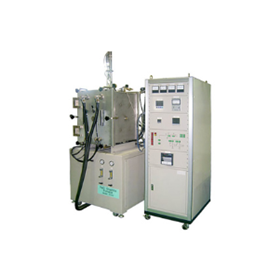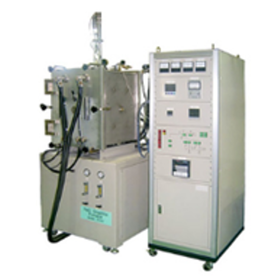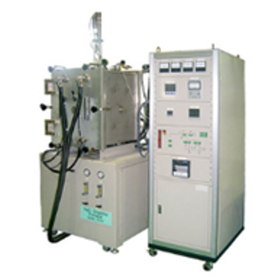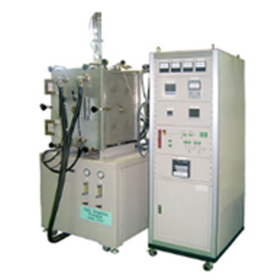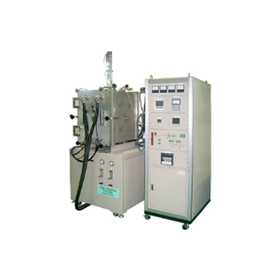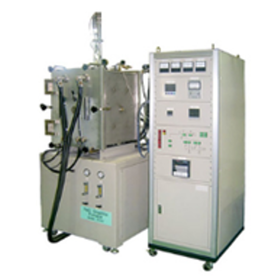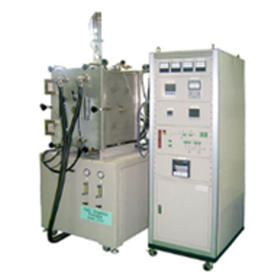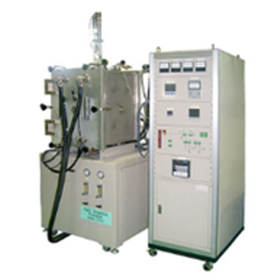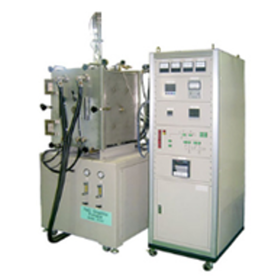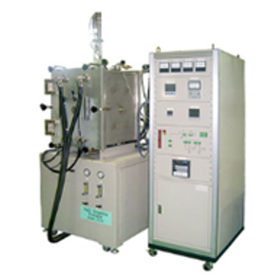
We have compiled a list of manufacturers, distributors, product information, reference prices, and rankings for Carbon Furnace.
ipros is IPROS GMS IPROS One of the largest technical database sites in Japan that collects information on.

Carbon Furnace - List of Manufacturers, Suppliers, Companies and Products

Carbon Furnace Product List

1~9 item / All 9 items

Displayed results

Carbon furnace <suitable for graphitization and high-temperature modification of carbon materials>

Graphitization / High-temperature annealing / Surface modification / Ash content reduction all in one machine. Compatible with vacuum × Ar/H2, achieving high reproducibility for research to small-scale production heat treatment.

Our company handles "carbon furnaces" that operate at 3000°C and in extremely low oxygen conditions. We address challenges such as the inability to reduce oxygen partial pressure, leading to oxidation and decarbonization in high-temperature regions that prevent achieving target characteristics, as well as the limited tray flexibility and low processing capacity/strict sample size constraints of tube furnaces. These furnaces can be used for applications involving graphite materials, graphite foils, graphite sheets, isotropic graphite, and molded bodies. [Reasons for Effectiveness in Graphitization] - Easy to create extremely low oxygen: The furnace material captures residual oxygen chemically due to its carbon composition, and the vacuum replacement eliminates air inside the sample beforehand. - Temperature range of 3000°C: Stable heat distribution and retention in the -3000°C graphitization zone, with rapid attainment and high reproducibility. - Flexibility in tray/sleeve design: Rectangular sleeves and stacking allow for simultaneous processing of multiple samples, speeding up condition setting. - Atmospheric flexibility: It is possible to combine vacuum/Ar/N2/low concentration H2 to reduce defects and facilitate thermal desorption. *For more details, please feel free to contact us.

  • Industrial Furnace
  • Carbon Furnace

Added to bookmarks

Bookmarks list

Bookmark has been removed

Bookmarks list

You can't add any more bookmarks

By registering as a member, you can increase the number of bookmarks you can save and organize them with labels.

Free membership registration

Why low oxygen and ultra-high temperature can be achieved: Small-scale carbon furnace

Suppressing micro leaks through years of seal design, processing precision, and assembly procedures! Maintaining low O2 even during long operation.

We will introduce why our small carbon furnace can achieve low oxygen and ultra-high temperatures. The carbon furnace material reacts with residual oxygen, featuring a design and manufacturing know-how that ensures it does not "leak." It removes air from inside the powder using a vacuum pump and replacement method. With a high emissivity graphite heater, a uniform heating hot zone, and high insulation, it efficiently heats while avoiding local overheating, making it possible to stably reach temperatures up to 3000°C. 【Features of the Small Carbon Furnace】 ■ Capable of reaching temperatures up to 3000°C: Quickly achieves ultra-high temperatures through the radiant heat of the graphite heater. ■ Easy to sinter in low oxygen: The carbon inside the furnace reacts with residual O2. ■ Air inside the powder is also replaced: Reduces O2 between particles through repeated vacuum and inert gas cycles. ■ Suppresses temperature variation: Reduces differences in the center, edges, and thickness direction with a "uniform heating zone" that warms evenly. *For more detailed information, please download the materials or feel free to contact us.

  • Industrial Furnace
  • Carbon Furnace

Added to bookmarks

Bookmarks list

Bookmark has been removed

Bookmarks list

You can't add any more bookmarks

By registering as a member, you can increase the number of bookmarks you can save and organize them with labels.

Free membership registration

Carbon furnace <reducing oxygen to the limit, heat treatment at around 3000°C>

Achieving extremely low oxygen partial pressure through getter treatment and vacuum replacement of furnace material carbon, suitable for processing in ultra-high temperature ranges.

The "carbon furnace" we handle solves challenges such as the time-consuming condition setting and the difficulty of reproducing short cycles. By evacuating the air inside the sample in advance, we shorten the replacement time. Additionally, we can arrange square trays in parallel with flexible tray configurations, allowing for the evaluation of thickness variation effects. We also have test machines available. Please feel free to contact us if you need assistance. 【Reasons Why Our Carbon Furnace is Effective (Partially)】 ■ Sintering at Extremely Low Oxygen Partial Pressure - Gradual replacement from vacuum to Ar/N2 - Reduction of residual O2/oxidizing species through the gettering effect of carbon materials ■ Ultra-High Temperature Process - Long-term stable operation at normal use temperatures up to 2800°C, with a maximum of 3000°C - Precise control of grain growth and rearrangement through gradual heating and holding in the 1200-2600°C range *For more details, please feel free to contact us.

  • Industrial Furnace
  • Carbon Furnace

Added to bookmarks

Bookmarks list

Bookmark has been removed

Bookmarks list

You can't add any more bookmarks

By registering as a member, you can increase the number of bookmarks you can save and organize them with labels.

Free membership registration

Carbon furnace <Reproduced well with ultra-low oxygen × 3000°C class × vacuum replacement>

From preprocessing to final firing in one machine. Suitable for research and small-scale production temperature recipes.

Our "Carbon Furnace" enables precise high-temperature phase transition, crystallization, and sintering through "ultra-low oxygen × 3000℃ class × vacuum replacement." It can be used in processes such as promoting phase transition and recrystallization, controlling grain growth (phase stabilization at high temperatures), densification sintering of ceramics and difficult-to-sinter materials, and energy control of surfaces and interfaces (surface stabilization under low oxygen conditions). It is suitable for developing temperature recipes from research to small-scale production. 【Reasons Why Our Carbon Furnace is Effective (Partial)】 ■ Creates ultra-low oxygen partial pressure - Vacuum pumping → Ar/N2 replacement (dilute H2 as needed*) to gradually lower the oxygen potential * H2 is operated within the safety design range of the equipment (e.g., below 4%) - The carbon material in the furnace absorbs residual O2 through getter action, suppressing side reactions ■ High-temperature stability at 3000℃ - Regular use up to 2800℃ / maximum up to 3000℃, with gradual temperature rise and hold for precise control of phase transition, crystallization, and sintering *For more detailed information, please download the materials or feel free to contact us.

  • Industrial Furnace
  • Carbon Furnace

Added to bookmarks

Bookmarks list

Bookmark has been removed

Bookmarks list

You can't add any more bookmarks

By registering as a member, you can increase the number of bookmarks you can save and organize them with labels.

Free membership registration

Serialized Part 4: Main Uses of Small Carbon Furnaces

Synthesis and sintering of high-temperature materials, as well as high crystallization of carbon-based materials! Here are some main application examples.

In the previous session, we introduced the "principle" of the small carbon furnace. This time, we will discuss the actual applications and how it can be applied in research and development. ■ Main Application Examples 1. Synthesis and Sintering of High-Temperature Materials (up to 3000°C) Thanks to the extremely low oxygen environment unique to carbon furnaces, it is possible to sinter high melting point materials such as carbides and nitrides without oxidation. 2. High Crystallization of Carbon-Based Materials Suitable for the high crystallization of materials like graphite and carbon nanotubes. 3. High-Temperature Treatment and Reduction Reactions of Metal Materials Metal oxides can be reduced under low oxygen conditions, allowing for control of microstructure and phases. 4. Evaluation of High-Temperature Gas Reactions Interactions with reactive gases and material stability can be verified in various atmospheres such as N2, H2, and Ar. 5. Material Process Evaluation at Research and Development and Prototype Scale Used for R&D purposes to optimize conditions in a short time. In the future, we are considering applications for the development of new materials utilizing more precise control of oxygen partial pressure. Next time, we will provide a detailed introduction to the "specifications." *For more detailed information, please download the materials or feel free to contact us.

  • Industrial Furnace
  • Carbon Furnace

Added to bookmarks

Bookmarks list

Bookmark has been removed

Bookmarks list

You can't add any more bookmarks

By registering as a member, you can increase the number of bookmarks you can save and organize them with labels.

Free membership registration

Carbon furnace <suitable for basic reaction tests of carbonization>

SiC/TiC/ZrC at high temperatures and extremely low oxygen 'quickly and reproducibly.' Optimization of solid-phase carbides, composite carbides (with B4C), and carbon supply conditions in a short cycle.

We handle a compact "carbon furnace" that can be gradually replaced from vacuum to inert gas. It can be used for experiments and processes related to solid-phase carbonization (powder mixing method, coating method, carburizing) and composite carbonization (such as using B4C) for increasing hardness and optimizing carbon supply conditions (types, ratios, and contact states of carbon materials). Please feel free to contact us if you have any inquiries. 【Reasons to Choose Our Carbon Furnace (Partial)】 ■ Rapidly reaches high temperatures - Stable attainment and maintenance of 1600-2800°C** - Temperature guidelines effective for carbonization: SiC 1600–2000°C, TiC 1500–2100°C, ZrC 1800–2300°C ■ Suppresses side reactions at extremely low oxygen partial pressure - Vacuum → Replacement with Ar/N2 - Reduces residual oxygen through getter action of furnace carbon, suppressing CO generation *For more details, please feel free to contact us.

  • Industrial Furnace
  • Carbon Furnace

Added to bookmarks

Bookmarks list

Bookmark has been removed

Bookmarks list

You can't add any more bookmarks

By registering as a member, you can increase the number of bookmarks you can save and organize them with labels.

Free membership registration

Carbon furnace <suitable for basic reaction tests of nitriding>

Reproduced well with 'extremely low oxygen × high temperature × vacuum replacement.' Short cycle tests for N2-based solid-phase nitriding, surface nitriding, and layer growth.

The "carbon furnace" we handle is suitable for basic reaction tests of nitriding. Since the reaction initiation temperature is high with N2 alone, balancing grain growth and coarsening is difficult, and during cooling, surface reoxidation occurs, leading to variations in color, resistance, and hardness. Our product addresses these challenges. Additionally, we have a track record of manufacturing furnaces at mass production scales, not just small units. Please feel free to contact us when you need assistance. 【Reasons Why Our Carbon Furnace is Effective】 ■ Creates an extremely low oxygen partial pressure - Gradually lowers the oxygen potential through vacuum pumping and N2 replacement - The carbon in the furnace material absorbs residual O2, suppressing oxidation side reactions ■ Quickly reaches sufficient high-temperature ranges - Achieves and maintains temperatures from 1400 to 2400°C in a short time ■ Short cycle for condition setting - Allows simultaneous evaluation of multiple samples with tray flexibility/shelf configuration, making it easier to verify the effects of thickness and contact *For more details, please feel free to contact us.

  • Industrial Furnace
  • Carbon Furnace

Added to bookmarks

Bookmarks list

Bookmark has been removed

Bookmarks list

You can't add any more bookmarks

By registering as a member, you can increase the number of bookmarks you can save and organize them with labels.

Free membership registration

Carbon Furnace for Research Institutions

Accelerating new material development in ultra-low oxygen environments.

In research institutions engaged in new material development, precise temperature management and atmosphere control are required to maximize the properties of materials. Particularly in processes such as high-temperature phase transitions, crystallization, and sintering, oxygen concentration significantly affects the quality of the materials. Processing under inappropriate conditions may lead to undesired properties or degradation of the materials. Our carbon furnace achieves "ultra-low oxygen × 3000℃ class × vacuum replacement," enabling highly reproducible high-temperature treatments. 【Application Scenarios】 - Fundamental research on new materials - Evaluation of material properties - Small-batch production of diverse varieties 【Benefits of Implementation】 - Production of high-quality materials - Reduction of research and development time - Adaptability to a variety of materials

  • Industrial Furnace
  • Carbon Furnace

Added to bookmarks

Bookmarks list

Bookmark has been removed

Bookmarks list

You can't add any more bookmarks

By registering as a member, you can increase the number of bookmarks you can save and organize them with labels.

Free membership registration

Carbon furnace for powder metallurgy

Support for precision molding in extremely low oxygen environments.

In the powder metallurgy industry, especially in precision molding, the sintering process is crucial for maximizing the material's properties. The control of oxygen concentration and temperature during sintering significantly affects the product's strength and dimensional accuracy, potentially leading to defects and performance degradation. Our carbon furnace achieves a precise sintering process through an ultra-low oxygen environment and high-temperature control at around 3000°C. 【Application Scenarios】 - Sintering of parts requiring high precision shapes - Sintering of special alloys and ceramics - Research and development of new materials 【Benefits of Implementation】 - Generation of high-density and homogeneous sintered bodies - Improvement in product strength and durability - Increased yield

  • Industrial Furnace
  • Carbon Furnace

Added to bookmarks

Bookmarks list

Bookmark has been removed

Bookmarks list

You can't add any more bookmarks

By registering as a member, you can increase the number of bookmarks you can save and organize them with labels.

Free membership registration

Related Categories of Carbon Furnace